He never counted a card. He read a contract. Three desperate casinos handed a former gaming regulator the pen, and by April 2011 they had paid him about $15 million for the privilege.
Don Johnson did not beat blackjack. He beat the terms Atlantic City wrote to attract him. Between December 2010 and April 2011, three casinos, the Tropicana, the Borgata and Caesars, offered a high roller a discount on his losses and a set of table rules he negotiated line by line. The man across the table had spent his career regulating casinos in four states and building wagering software for racetracks. The result was about $15.1 million in documented winnings, one casino’s worst night on record, a removed chief executive, and a Hall of Fame plaque. This page is the documented record: what is proven, what is claimed, and what is headline noise. Every number carries its source, and every number we could not verify says so.
The story in 30 seconds. After 2008, Atlantic City’s gaming revenue fell by more than a fifth, and casinos fought for the few players who bet six figures a hand. Their tool was the loss rebate: lose big, and we refund a slice. Don Johnson, a former state gaming regulator, negotiated 20% back on any daily loss over $500,000, plus table rules that cut the house edge to roughly 0.25%. Wins paid in full; losses were discounted. At those terms the game favoured the player, and he played it at $100,000 a hand. About $15.1 million later, two casinos withdrew the deal, one barred him, and the Blackjack Hall of Fame inducted him in 2017.
The record, in numbers
| The record, in numbers | Source |
|---|---|
| ~$15.1 million won from three Atlantic City casinos, December 2010 to April 2011 | Wikipedia; ABC News; Press of Atlantic City, independently |
| ~$5.8 million the Tropicana session, April 2011, the casino’s worst on record | Press of Atlantic City; IBTimes |
| 20% rebate on daily losses over $500,000 | Wikipedia; ABC News; Press of Atlantic City |
| ~0.25% house edge after his negotiated rules | Press of Atlantic City, Johnson’s own framing |
| $100,000 maximum bet per hand, approved by the Tropicana’s chief executive | Wikipedia; IBTimes |
| 4 states where he served as a gaming regulator: Oregon, Idaho, Texas, Wyoming | Wikipedia |
| 6 May 2011 the Tropicana’s CEO is removed, weeks after the record night | IBTimes; contemporaneous reporting |
| 2017 inducted into the Blackjack Hall of Fame at Barona | Blackjack Hall of Fame |
Did Don Johnson count cards? No, and that is the whole story
He said he did not, the casinos investigated and agreed, and nobody has ever produced evidence otherwise. Card counting tracks the composition of the shoe and raises the bet when the remaining cards favour the player. It is legal, it is hard, and casinos hunt for it. Johnson’s edge lived somewhere the surveillance room never looks: in the paperwork signed before he sat down.
The casinos’ own investigation found no cheating and no counting (IBTimes). What they found was a player who had studied the game, played roughly one hand a minute, and never gave back the terms he had negotiated.
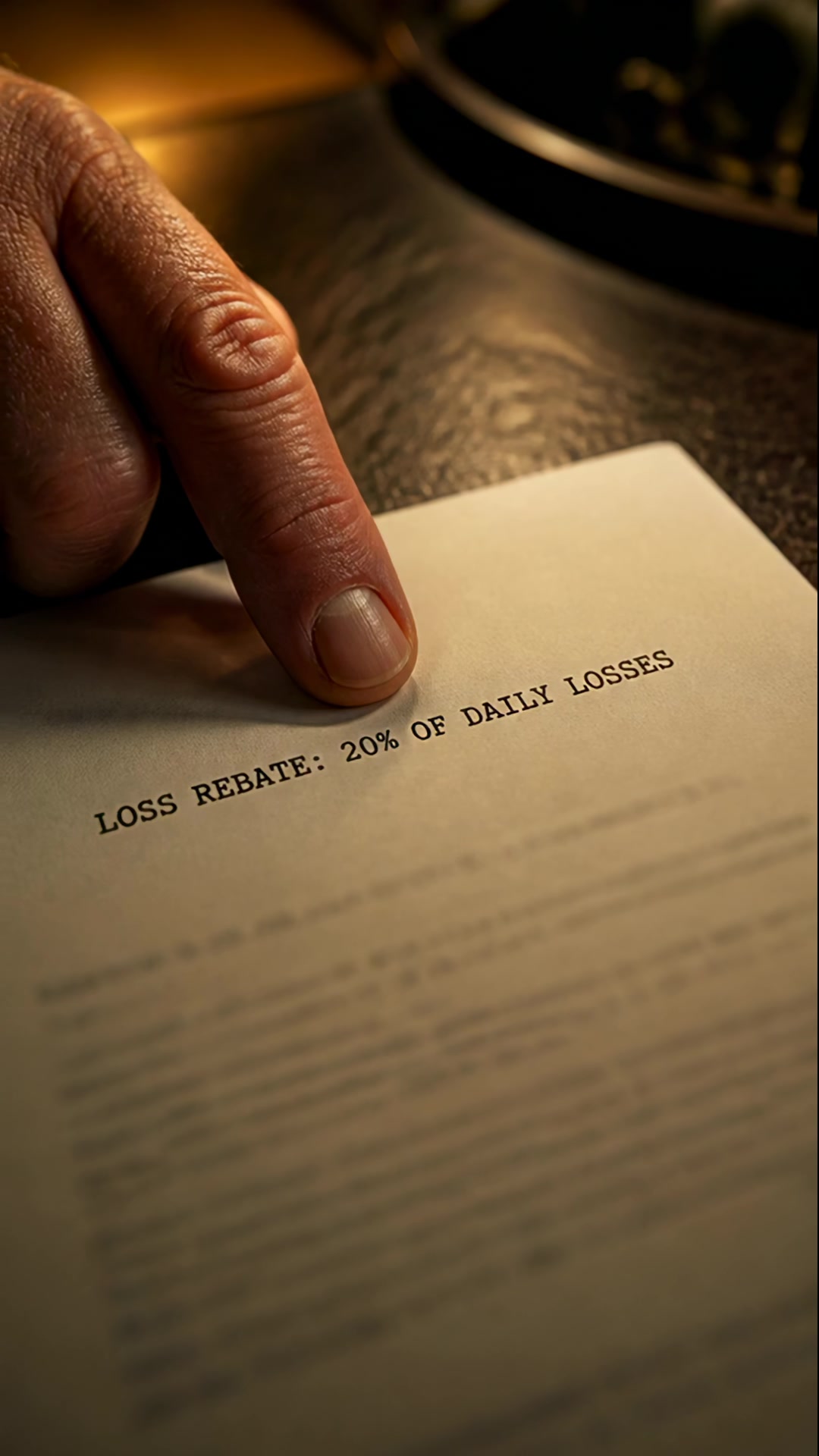
How the loss rebate works, and why it broke the math
A loss rebate is an ordinary marketing tool. A casino tells a high roller: if you have a bad day, we will refund part of it. It reads like generosity. It is a bet on volume: the house edge earns more over thousands of hands than the rebate gives back on the bad days.
That logic holds only if the house edge is real. Johnson negotiated it away.
- Six-deck shoe, hand-shuffled. No continuous shuffling machine.
- Dealer stands on soft 17. A small but measurable shift toward the player.
- Re-split aces. Another shift toward the player.
- Double down and split on favourable terms (the full rule string is documented only on bj21.com; we attribute it to Stanford Wong and do not state it as fact).
Together, by his own account, those rules cut the house edge to about a quarter of one percent. A game that close to even is, over a session, close to a coin flip.
Now add the rebate. Any day that ended more than $500,000 down, the casino refunded 20% of the loss. Winning days paid in full. Losing days cost eighty cents on the dollar. A coin flip where heads pays 100 and tails costs 80 is not a fair coin. Bet large enough to reach the rebate threshold on a bad day, and stop when you are ahead so the rebate only ever applies to losses, and the expectation turns positive.
The casinos did not lose to a system at the table. They lost to the terms they wrote to attract him.
Win a day: keep 100%. Lose a day: pay 80%. At a 0.25% edge, the coin is almost fair before the discount and clearly unfair after it. Johnson’s discipline, by his own account, was to quit when ahead, so the 20% only ever touched the losing days.
Why three casinos signed it
Because they were losing a bigger game. Atlantic City’s gaming revenue peaked at about $5.2 billion in 2006 and had fallen past $3.3 billion by the time Johnson sat down (IBTimes; The Atlantic). The 2008 crash cut the visitors. Pennsylvania and other neighbouring states had legalised table games and kept the drive-in crowd at home. What remained was the whale market, and every marketing department in the city was competing for the same few dozen players.
Discount deals were the standard weapon. Johnson’s insight was that this particular weapon was mispriced, and that the people pricing it did not have his background.
Who was across the table: a regulator, not a gambler
Johnson was 49. He had been hired at 30 to run Philadelphia Park racetrack, the property that later became Parx Casino. He then served as a state gaming regulator in Oregon, Idaho, Texas and Wyoming, and in the early 2000s founded Heritage Development, a Wyoming firm that built computer-assisted wagering programs for horse racing (Wikipedia). He lived in Bensalem, Pennsylvania, and told ABC News he had been playing blackjack for about fifteen years.
He was not a gambler who learned maths. He was a maths-and-regulation professional who learned to gamble. When the Tropicana’s chief executive personally approved a $100,000 limit per hand for him, he was approving it for a man who had spent two decades on the other side of that desk.
His own description of the job, to ABC News: “If you can take the swings, you’re going to win. You also have to understand the math.” And on the swings: “I don’t wear Kevlar. I’m not bulletproof.”

The night the Tropicana lost $5.8 million
April 2011. A single session, and the largest loss to one player in the Tropicana’s history (Press of Atlantic City; IBTimes). By Stanford Wong’s account on bj21.com, the session ran about twelve hours; Mark Bowden’s profile in The Atlantic describes three consecutive hands worth about $1.2 million, including one hand near $800,000 after splitting eights twice. We print both as attributed colour, not as fact.
The month’s numbers were fact. The Tropicana’s April revenue placed it second-lowest of the city’s eleven casinos (IBTimes). On 6 May 2011 the casino removed its chief executive, Mark Giannantonio, the man who had signed off on the $100,000 limit. He denied the loss cost him his job. We report the denial and do not assert the cause.
What happened after: two withdrawals, one ban
The Tropicana and the Borgata stopped offering Johnson those terms. Neither barred him from the building; they simply took the deal off the table. Caesars barred him outright (Wikipedia). Giannantonio later told The Atlantic that casinos around the world had done the same.
None of them disputed the payouts. Every hand was legal, every dollar was kept, and the only remedy the industry found was to stop playing him. The run sits at number eight on our leaderboard of documented wins.
Coming next: what the casinos did once they understood what they had signed, and how a man who had never been caught cheating became unwelcome in every room that mattered. Follow @bigwinstories for that film.
The Hall of Fame, and its condition
In 2017 the Blackjack Hall of Fame, housed at the Barona resort in California, inducted Johnson. The Hall’s own description of the achievement: he “beat three Atlantic City casinos out of $15 million in a six-month period in 2011” while “playing at very high stakes, $100,000 per hand”.
Membership comes with a standing arrangement the Hall has described for years: lifetime room and board at Barona, on condition the member never plays blackjack there. The regulator who made three casinos sign their own defeat now holds a lifetime comp at a fourth, so long as he never sits down.
What the headlines got wrong
| The headline said | The record says |
|---|---|
| “The man who broke Atlantic City” | His $15 million was noise against a market that had lost roughly $2 billion a year in revenue since 2006. Atlantic City’s decline was structural: the 2008 crash and legalised competition next door |
| A card counter beat the house | He did not count. The casinos investigated and said so. The edge was in the negotiated terms, not the shoe |
| He beat five casinos | Five sessions, three casinos: Caesars, the Borgata and the Tropicana |
| He won exactly $15,078,000 | That figure and its session-by-session split come from one specialist site. Every independent outlet says “about $15 million”. We grade the total DOCUMENTED and the precision ATTRIBUTED |
| The casinos were tricked | They wrote the terms, approved the limit at chief-executive level, and had every rule in front of them. Nothing was hidden |
| He got rich on luck | The rebate turned a near-even game into a positive-expectation one before the first card. Luck decided the size of the swings, not their direction |
| Casinos banned him everywhere | Two withdrew the terms without barring him. One barred him. The rest of the story is our next film |
How much did Don Johnson really win? The honest answer
About $15.1 million in the documented run, and nothing defensible beyond it. Any lifetime figure you see elsewhere has no source. We publish what is corroborated and grade the rest.
The BigWinStories Confidence Ledger
Three grades: DOCUMENTED (stated as fact), ATTRIBUTED (someone’s own account, printed with its name), REJECTED (no defensible source; we will not print it as fact). The full method is on how we verify.
| Figure | Grade | Why |
|---|---|---|
| ~$15.1 million, three casinos, Dec 2010 to Apr 2011 | DOCUMENTED | Wikipedia, ABC News and the Press of Atlantic City independently |
| ~$5.8 million, Tropicana, single session, April 2011 | DOCUMENTED | Press of Atlantic City; IBTimes; a casino record |
| 20% rebate on daily losses over $500,000 | DOCUMENTED | Corroborated across outlets |
| ~0.25% house edge after the negotiated rules | DOCUMENTED as his framing | Repeated in every account; the arithmetic checks out for the rules that are corroborated |
| $100,000 maximum bet per hand | DOCUMENTED | Wikipedia; IBTimes; the Hall of Fame |
| Exact total $15,078,000 and the per-session split (Caesars $4.23M; Borgata $998k, $1.8M, $2.25M; Tropicana $5.8M) | ATTRIBUTED, Stanford Wong, bj21.com | Hall of Fame authority, but a single specialist site. Below court records and named newsrooms in our hierarchy |
| Bet tiers ($100k one spot, $50k two, $45k three) and the full rule string | ATTRIBUTED, bj21.com | Same source, same grade |
| He quit when ahead, so the rebate only applied to losing days | ATTRIBUTED, Johnson | The mechanism is documented; the discipline is self-reported |
| Three hands, ~$1.2 million, one near $800,000 on split eights | ATTRIBUTED, The Atlantic | Colour from Bowden’s profile |
| The loss cost Giannantonio his job | ATTRIBUTED, reporters; denied by him | We print the timing and the denial, not the cause |
| “He bankrupted Atlantic City” | REJECTED | Headline language. The market lost billions to structural forces; his run was a rounding error |
| Any lifetime winnings figure above the documented run | REJECTED | No source exists |
| “Beat five casinos” | REJECTED | Five sessions, three casinos |
Documented wins across all our stories live on the leaderboard, same grading, every entry. Johnson sits at number eight. Fifteen million, and seven bigger wins above him.
FAQ
Did Don Johnson count cards?
No. He said so, the casinos’ investigations agreed, and no evidence has ever contradicted it. His advantage came from the terms he negotiated before playing: a 20% rebate on daily losses over $500,000 and table rules that cut the house edge to roughly 0.25%. Card counting, the other legal way to beat blackjack, is a different story.
How much did Don Johnson win in Atlantic City?
About $15.1 million from three casinos between December 2010 and April 2011: roughly $6 million from the Tropicana, $5 million from the Borgata and $4 million from Caesars. The exact figure of $15,078,000 comes from a single specialist source and is attributed, not documented.
Was what Don Johnson did legal?
Yes. Every rule he played under was agreed by the casino in advance, and no casino disputed a payout. Two withdrew the terms afterwards and one barred him, which a private business is entitled to do.
What is a loss rebate in blackjack?
A marketing deal in which the casino refunds part of a high roller’s losses, usually above a threshold. It is profitable for the house only while the house edge is intact. Johnson’s negotiated rules removed most of the edge, which turned the rebate into a player advantage.
What happened to the Tropicana after the $5.8 million night?
Its April 2011 revenue placed it second-lowest among Atlantic City’s eleven casinos, and on 6 May 2011 the company removed chief executive Mark Giannantonio, who had approved Johnson’s $100,000 limit. He denied that the loss cost him his job.
Is Don Johnson in the Blackjack Hall of Fame?
Yes, inducted in 2017. The Hall is housed at Barona in California, and members receive lifetime comps there on condition they never play blackjack at the property.
Could a player do this today?
The rebate deals still exist, but the terms that made Johnson’s run possible were withdrawn within months, and the industry now prices them against exactly this scenario.
Sources
Links checked 12 Sep 2026.
- Wikipedia, Don Johnson (gambler): background, regulator roles, per-casino totals, rules, the bans
- ABC News, May 2011: the two direct quotes, the $100,000 bet, his age and residence
- Press of Atlantic City, “rules put the math on his side”: the 0.25% framing, the Tropicana record (paywalled to our crawler; article confirmed live)
- IBTimes: April 2011 revenue ranking, the executive change, the investigation finding no cheating
- Blackjack Hall of Fame, Don Johnson: induction, the Hall’s own wording
- bj21.com: Stanford Wong’s session-by-session breakdown and rule set; everything sourced only here is ATTRIBUTED
- The Atlantic, Mark Bowden, “The Man Who Broke Atlantic City” (April 2012): the canonical profile, attributed colour only
- Our verification brief: every claim above is tiered; anything unverifiable is graded or omitted. The published method: how we verify
Cite this page: BigWinStories, “Don Johnson: The Casino Regulator Who Made Atlantic City Sign Its Own Defeat,” bigwinstories.com/don-johnson-blackjack-true-story (2026). Every figure carries its grade; quote the grade with the number.
Watch the 58-second film this story comes from, The Referee on YouTube, then follow @bigwinstories: the next film is what the casinos did once they understood the signature was their own.
Were you there? Pit staff, host, cage, surveillance: write to stories@bigwinstories.com (amount, date, venue, proof). Verified accounts enter the record; credit or anonymity, your call.
Gambling should be entertainment. If you’re concerned about your gambling, visit BeGambleAware.org.
Leave a Reply